


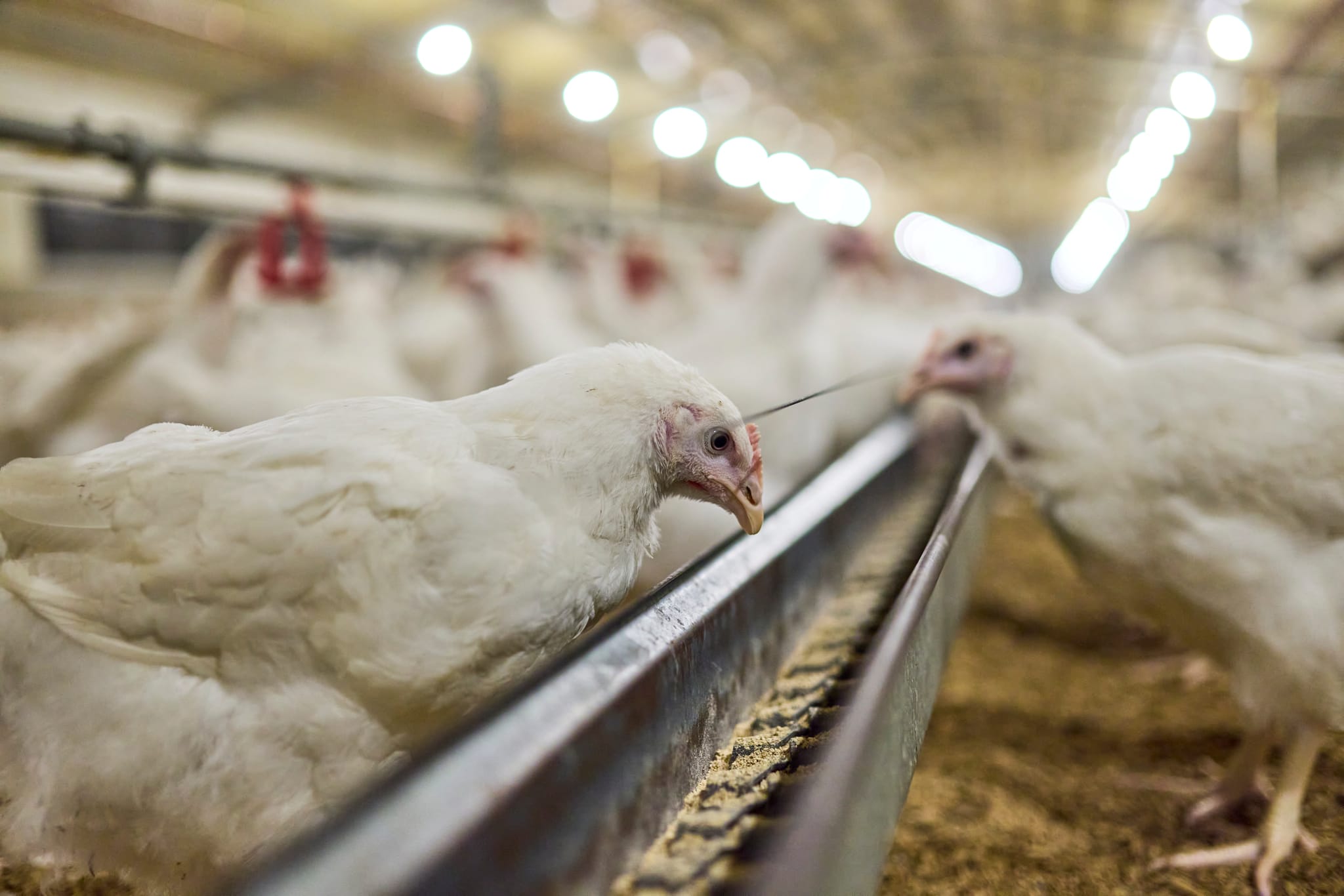
The Sustainable Precision Feeding in Broiler Chickens in Australia project is a world-first research consortium that is helping to secure the future of Australia’s most popular animal protein.
Funded by AgriFutures Australia and led by University of Queensland’s (UQ) Centre for Nutrition and Food Sciences, the Program represents a world-first global collaboration of eleven Australian and international universities, the Queensland Department of Agriculture and Fisheries (QDAF), and nine research organisations and project sponsors. The Program will investigate how chicken meat producers can use nutrition to optimise gut health, animal welfare, and sustainability.

Program 1: Maternal programming and amino acid precision feeding
Advance amino acid formulation in chicken meat production involving broiler breeder diets, in ovo interventions, gut healthy microbiota balance and starter-grower diets to improve growth uniformity.
Learn More
Program 2: Carbohydrate precision feeding
Identify diet ingredient ‘sweet spots’ delivering digestible carbs and protein for rapid growth, plus non-digestible carbs to support gut microbiota and reduce pathogen infection
Learn More
Program 3: Innovative diet formulations
Explore alternatives to soybean meal by identifying protein-rich ingredients and evaluating locally-grown grain legumes for chicken meat production under Australian conditions.
Learn More
Program 4: Early gut microbiota
Conduct broiler trials on vegetarian diets to enhance beneficial gut bacteria, assess gizzard, ileum, cecum function, and evaluate treatment via leaky gut challenge targeting Treg cells and inflammation.
Learn More
Program 5: Litter management
Reduce litter moisture via targeted nutrition and enhanced evaporation strategies, while improving environmental monitoring to assess commercial value under standard production conditions in R&D settings.
Learn More
Program 6: Integration
Ensure the work from Programs 1–5 deliver integrated poultry solutions combining nutrition and microbial strategies, while safeguarding health and enabling industry adoption of Consortium findings.
Learn More
Subscribe
Sign up to receive ‘Beak to Beak’, the AgriFutures Chicken Meat newsletter, and keep up to date with the latest chicken meat news, events and program activities.
Subscribe here